

spot_img
Home Blog Page 66

SPE NAMES DONALD (DON) HYLTON THERMOFORMER OF THE YEAR

SPE NAMES DONALD (DON) HYLTON THERMOFORMER OF THE YEAR

The Society of Plastics Engineers (SPE) Thermoforming Division has named Donald (Don) Hylton Thermoformer of the Year.

The award will be presented during SPE’s Thermoforming Awards Dinner, held in conjunction with the 30 th  SPE Thermoforming Conference.  The conference will take place May 19-21, 2025 in Atlanta, GA, at Cobb Galleria Centre and the Renaissance Atlanta Waverly Hotel. The Awards Dinner will be held on Tuesday, May 20, at the Hotel.

Don received his BS in chemistry and biology from Kentucky State University and pursued graduate studies in physical chemistry at the University of Louisville. Don began his career in GE’s Plastics Application Center. He was tasked with developing test procedures on a new commercial instrument called a Rheometrics Mechanical Spectrometer (now part of TA Instruments). Don developed the first dynamic mechanical thermal analysis (DMTA) test on this instrument which is now a standard ASTM test method: D7028.

GE developed a program to replace metal refrigerator liners with a thermoformed plastic liner. The new inflation instrument Don developed showed the differences in the materials, reducing the need to conduct expensive and time-consuming trials. The test proved useful in other thermoforming applications and blow molding. GE’s trade secret was eventually published in the Journal of Polymer Engineering and Science in 1980 and was later revered by Chemical Week magazine as the most significant contribution of the year.

In 1980, Don joined ExxonMobil’s Polymers Division and received two assignments: 1) to determine the cause of premature failure of a fiber-grade polypropylene. 2) to develop a thermoformable grade of polypropylene. Polypropylene was not used in thermoforming at the time.

Don’s experience with GE’s ABS liner program became useful for this effort. Don quantified the viscoelastic properties a material needed to be successfully and consistently thermoformed.

The task was to create these same properties with PP. The product became known as “High Melt Strength (HMS PP), a term used today to describe thermoformable PP. Several commercial trials were conducted with the new melt phase forming PP. This was the first time PP was thermoformed on conventional vacuum forming equipment.

Don was also a pioneer in the development of co-extruded multilayer food packaging in collaboration with Campbell Soup, Hormel, and Ball Plastics. These were the first thermoformed shelf-stable plastic food packages commonly seen today. He also worked with Millikin Company to develop the first clear PP for food packaging. Today it is known as clarified PP.

Don attended one of Bill McConnell’s thermoforming workshops and met Stan Rosen, Charlie Hovesapien, Jim Throne, John Griep, and numerous other thermoforming pioneers. They encouraged Don to join the SPE Thermoforming Division and become a member of its board of directors. Bill soon invited Don to present at his next workshop- an invitation that led to Don’s employment with McConnell Company to this day.

In 1995, Don joined Clark Atlanta University as Associate Director of the New Science and Technology Center where he conducted research and pursued new ways of characterizing materials for thermoforming. He also mentored students and influenced their decisions to pursue careers in plastics. Over the years, Don has advised more than 20 PhD chemistry and chemical engineering students at Clark Atlanta, University of Louisville, and Georgia Tech.

At Clark Atlanta, Don developed a new technology and testing equipment for evaluating materials for thermoformability called the Thermoforming Index. Don was able to isolate critical material properties that give a material its “melt strength.” This technology has been used to solve many material-related problems in thermoforming production and is used as a quality control tool.

A member of the Society of Plastics Engineers since 1985, Don was named an Emeritus Member in 2018, and in 1997, one of just three thermoforming Fellows of the Society. An active SPE Thermoforming Division Board Member, Don served as the Division’s ANTEC Technical Program Chair from 2000-2010 and was the first chair of the Division’s Student Affairs Scholarship Program. Don was presented with the Division’s Outstanding Achievement Award in 2000 and its Lifetime Achievement Award in 2014 when he was also named an Emeritus Member of the Division. Don also served as ASTM Plastics Sheeting and Films Subcommittee Chair and reviewed and updated all ASTM standards and test methods for sheeting and films. Don received the ASTM Outstanding Achievement Award for his work in sheeting and films. He is the author of numerous technical papers and the book, Understanding Plastics Testing.

“Each of Don Hylton’s achievements is more impressive than the last,” said Paul Uphaus, SPE Thermoforming Division Chair.  “The SPE Thermoforming Division Board is honored to name Don Hylton as the 2025 SPE Thermoformer of the Year.”

https://thermoformingdivision.com

#thermoformingdivision#modernplasticsindia #modernplasticsasia #modernplastics#plasticsnews#plasticsplanet #modernrecyclingindia#modernplasticsglobal#modernplasticsworld#plasticstalk#modernplasticsgermany#modernplasticsnetwork #plasticdevelopment

 

Car Users’ Concerns to Define Interior of Fully Autonomous Cars, Citing 5th Global Automotive Consumer Survey by Asahi Kasei

Car Users’ Concerns to Define Interior of Fully Autonomous Cars, Citing 5th Global Automotive Consumer Survey by Asahi Kasei

Fully autonomous cars will become mobile living rooms, allowing car manufacturers to reimagine the future of car interiors. In its fifth annual survey, the Japanese technology company Asahi Kasei asked car users in the four major automotive markets about their expectations and concerns regarding fully autonomous vehicles and their perception of sustainability. Customer preferences for interior design, features, and usage scenarios offer the automotive industry valuable hints about what the car of the future should look like.

The results of Asahi Kasei’s fifth global Automotive Consumer Survey present meaningful information about what customers in the four major automotive markets (Japan, China, Germany, and the United States) expect from autonomous vehicles and how they would spend their time in one.

Distrust in technology

Car users are still conservative regarding the operation of a fully autonomous car; a retractable steering wheel and pedals are not considered valuable to most respondents. This confirms the results of the last survey from 2022, which found that even in fully autonomous vehicles, a large proportion of users in Germany, the USA, and China prefer to have a steering wheel and brake pedal for optional manual control. In Japan, one in two share this outlook. In Germany and the USA, providing a manual control option could help increase acceptance of fully autonomous cars.

In addition, two out of three car users in Germany, the USA, and China stated they would still observe traffic while in autonomous mode—activities while in the car, such as watching movies or playing games, are at the bottom of the list (see Figure 1). This is another indication that car users today have safety and trust concerns about fully autonomous cars. These sentiments will profoundly define the interior design of the first generations of fully autonomous vehicles.

Silent cabin for communication and listening to music

When asked about the most valued interior aspect of an autonomous car, one out of two respondents mentioned “silent cabin” (see Figure 2). This speaks to the woes of many battery electric vehicle (BEV) users; almost every fourth user of a BEV mentioned “too much noise while driving” as the most annoying aspect of the driving experience. While the BEV itself is quieter than a car with an internal combustion engine (ICE), the noise of wind, tires, gears, and motors—sounds that are typically suppressed by the engine noise—becomes more prevalent. In fully autonomous electric vehicles, and with the ability to engage with other activities while commuting, silence will even become more important for customers.

Looking at activities while riding in an autonomous vehicle, listening to music and podcasts is the primary activity of car users worldwide while driving, with 66% in the USA, 61% each in China and Japan, and 56% in Germany. Talking with other passengers is equally high in ranking, with sleeping or working as less important, highlighting the need for tables or lie-flat seats.

Perception of sustainability differs among regions

Car users no longer define a “sustainable vehicle” only by its drivetrain technology but also by its carbon footprint in production, easily recyclable materials, and overall sustainable production along the entire value chain. Buyers’ understanding of sustainability is growing, and the relevance of this topic in the purchasing process has increased in recent years.

Respondents in the Western markets define a sustainable car by its use of recyclable materials and sustainable production along the value chain. Meanwhile, for car users in China and Japan, the drivetrain technology primarily defines a sustainable car (see Figure 3). This topic is becoming more relevant for the purchase decision process, particularly in Western countries, with 35% of all respondents in Germany and the USA indicating they would switch their car brand to a more sustainable manufacturer to support greener mobility.

https://www.asahi-kasei.com/.

#asahikasei#modernplasticsindia #modernplasticsasia #modernplastics#plasticsnews#plasticsplanet #modernrecyclingindia#modernplasticsglobal#modernplasticsworld#plasticstalk#modernplasticsgermany#modernplasticsnetwork #plasticdevelopment

XSYS Launches Nyloflex XSN For Superior Performance And Flexibility In narrow Web Printing

XSYS Launches Nyloflex XSN For Superior Performance And Flexibility In narrow Web Printing

  • Ideal for narrow web applications using UV, water-based, and solvent-based inks
  • Inherent flat-top dot plate compatible with both thermal and solvent processing
  • Enhanced formulation with CleanRelease Technology for reduced downtime and plate cleaning

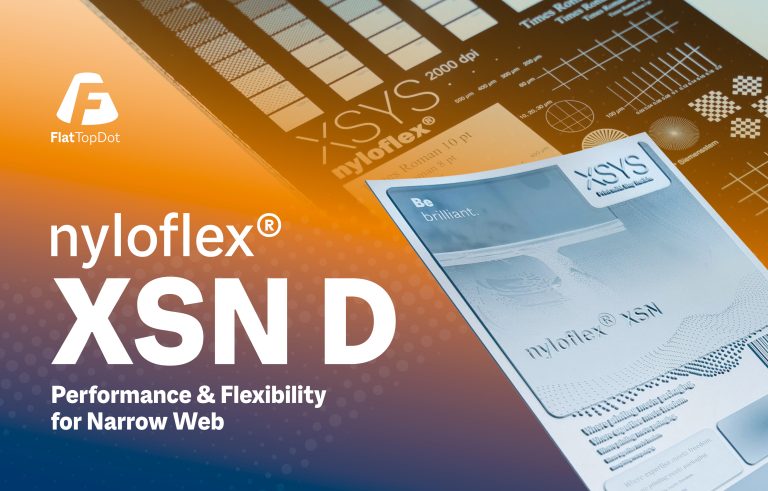
XSYS is proud to announce the launch of nyloflex  XSN, the newest innovation in flexographic plates designed for narrow web printing. This plate combines unparalleled performance with maximum flexibility, catering to the diverse needs of narrow web printers who require efficiency and versatility without compromising on quality.

“With the nyloflex  XSN, we’ve introduced a plate that empowers narrow web printers to meet rapidly changing market demands with confidence,” said Florian Hoelzle, Product Manager for nyloflex  plates at XSYS. “It’s unique flat-top dot structure and new CleanRelease Technology ensure cleaner plates, longer print runs, and minimal press downtime, making it a game-changer in the narrow web segment.”

Key Features and Benefits

Performance & Flexibility for Narrow Web

The nyloflex  XSN is a flat-top dot plate compatible with both thermal and solvent processing methods, providing printers with unmatched versatility. This dual compatibility allows seamless adaptation to evolving customer demands without the need for additional equipment or process changes.

Clean Release Technology for Clean and Consistent Print jobs

Featuring the new CleanRelease Technology, the plate’s formulation prevents ink buildup on the plate surface. This innovation reduces the need for frequent cleanings and press stops, significantly improving Overall Equipment Efficiency (OEE).

Outstanding Compatibility with Various Ink types

The nyloflex  XSN is designed to perform exceptionally well with UV inks, as well as water-based and solvent-based inks. This compatibility ensures outstanding print quality across paper and film substrates.

Plug-and-Play with Existing Equipment

Engineered as an inherent flat-top dot plate, the nyloflex  XSN eliminates the need for additional exposure units or consumables. Printers can achieve superior results right out of the box, simplifying production workflows and reducing costs.

Fast Turnaround for High-Pressure Environments

Thanks to its compatibility with both thermal and solvent processing, the nyloflex XSN offers unparalleled flexibility for integrated printers needing quick design changes and efficient plate turnaround times.

Enabling Printers to be Brilliant

“At XSYS, our goal is to help customers achieve brilliance through innovative solutions that simplify production and enhance productivity,” said Florian. “The nyloflex  XSN embodies this vision by combining cutting-edge technology with practical usability, setting a new standard for narrow web printing.”

www.xsysglobal.com

#xsysglobal#modernplasticsindia #modernplasticsasia #modernplastics#plasticsnews#plasticsplanet #modernrecyclingindia#modernplasticsglobal#modernplasticsworld#plasticstalk#modernplasticsgermany#modernplasticsnetwork #plasticdevelopment


Orbia Alphagary Expands Manufacturing Capacity In Altamira Mexico To Meet Growing Customer Demand

Orbia Alphagary Expands Manufacturing Capacity In Altamira Mexico To Meet Growing Customer Demand

Orbia Advance Corporation S.A.B. de C.V. (BMV: ORBIA) Polymer Solutions’ business group Alphagary, a leading global supplier of compounds and additives, announced today a significant expansion of its manufacturing facility in Altamira, Mexico. The company is installing a new production line designed to process materials with FDA-sanctioned ingredients, catering to applications in healthcare, food contact and skin contact industries. This expansion will add 15,000 tons per year to the facility’s production capacity.

The decision to expand comes in response to heightened market and customer demand, according to Santiago Urbina, Vice President Commercial at Orbia Alphagary. He said, “Our goal is to better serve our customers and respond effectively to growing market needs. Over the past several years, we’ve seen increased demand for specialized materials, particularly in sectors like healthcare and food safety, where the quality and safety of materials are paramount. By adding this new production line, we will be able to meet these demands more efficiently, while maintaining the high standards of quality and service that our customers have come to expect from Orbia Alphagary. This expansion is a direct reflection of our commitment to staying ahead of market trends and continuously enhancing our capabilities.

The expansion project began in July, with the new assets expected to be operational by the fourth quarter of 2024. The new production line will feature state-of-the-art equipment with advanced safety features. Rick Correia, Operations Director at Orbia Alphagary stated, “We are committed to incorporating the latest safety technologies in our operations that will significantly enhance the working environment for our employees, reduce potential risks and improve overall efficiency. This investment in safety is just as important as the increased production capacity, because we believe that operational excellence starts with the well-being of our people and the reliability of our processes.”

A comprehensive analysis was conducted to select the most suitable equipment for the expansion. The chosen equipment is designed to use less energy and reduce waste, contributing to a more environmentally friendly production process. This commitment aligns with Orbia Alphagary’s ongoing efforts to minimize its environmental impact and conserve natural resources.

This expansion underscores Orbia Alphagary’s dedication to innovation, sustainability and customer satisfaction. The new production capabilities will strengthen the company’s position in the market and enhance its ability to provide high-quality materials for critical applications.

www.orbia.com

www.alphagary.com

#alphagary#orbia.#modernplasticsindia #modernplasticsasia #modernplastics#plasticsnews#plasticsplanet #modernrecyclingindia#modernplasticsglobal#modernplasticsworld#plasticstalk#modernplasticsgermany#modernplasticsnetwork #plasticdevelopment

An Exclusive interview with Mr. Ashok Kapoor Managing Director of Kaptiva Injection Moulding Machines with Modern Plastics India (MPI) Magazine a Part of Modern Plastics Global Network

An Exclusive interview with Mr. Ashok Kapoor Managing Director of Kaptiva Injection Moulding Machines with Modern Plastics India (MPI) Magazine a Part of Modern Plastics Global Network

What inspired the foundation of Kaptiva, and how has the journey been so far?

Kaptiva was born out of a vision to make precision-driven injection moulding solutions accessible. Over the past 14 years,  we’ve built a legacy of quality and reliability, focusing on 100% Made-in-India machines. By integrating cutting-edge technology and customer-centric designs, Kaptiva has positioned itself as a trusted partner across industries like automotive, medical, electronics, and packaging.

How does Kaptiva stand out in a competitive market?

Our ability to customize solutions is a major differentiator. Clients today need machines that adapt to specific materials and production requirements. Kaptiva’s in-house R&D team works closely with customers to deliver machines that meet and often exceed expectations.  Additionally, we’ve incorporated Industry 4.0 features to ensure real-time monitoring, predictive maintenance, and enhanced efficiency.

S u s t a i n a b i l i t y i s t h e b u z z w o r d i n ma n u f a c t u r i n g . H o w d o e s K a p t i va incorporate it?

Sustainability is a priority for us. Our servo machines are designed to consume up to 50% less energy, and we’ve developed solutions for processing recycled and biodegradable materials. This approach not only helps our clients reduce operational costs but also supports their sustainability goals, ensuring we’re part of the solution for a greener future.

Can you elaborate on Kaptiva’s Industry 4.0 capabilities?

Industry 4.0 is integral to our vision. We’ve equipped our machines with sensors and advanced control systems that provide real time data on performance, energy consumption, and predictive maintenance schedules. This allows clients to optimize production, minimize downtime, and achieve higher efficiency.

Collaboration is vital in today’s world. How has Kaptiva embraced it?

Collaboration drives innovation. We’ve partnered with global technology providers to integrate automation and robotics into our machines. We also work with industry associations to stay ahead of emerging trends and standards. These collaborations ensure that we bring only the best  to the table for our clients.

What’s your roadmap for Kaptiva’s future?

Our focus is on scaling our presence both in India and globally. We plan to introduce next generation machines that emphasize efficiency, flexibility, and sustainability. By continuously investing in R&D and building strong client relationships, Kaptiva is poised for a future of growth and innovation.

Kaptiva is known for its customized solutions. Could you elaborate?

Every client has unique requirements, and customization is our forte. From designing machines for specialty polymers to developing high-tonnage models for automotive parts, we ensure that every Kaptiva machine is tailored to fit the client’s exact needs. This flexibility has earned us trust across multiple industries.

How does Kaptiva address the challenges in plastics manufacturing today?

Challenges like increasing material costs and sustainability pressures demand innovative solutions. Kaptiva’s machines are designed to maximize resource efficiency, reduce waste and process advanced materials like bioplastics. These capabilities help our clients stay competitive in an evolving market.

What’s your message to the industry?

Kaptiva is not just a machine manufacturer; we are partners in progress. As the industry evolves, we remain committed to innovation, adaptability, and excellence.  Our goal is to empower manufacturers with solutions that drive growth and sustainability.

How does Kaptiva plan to expand globally?

Global expansion is a key focus for us. We’re currently exploring partnerships in international markets while participating in global trade fairs to showcase our capabilities. Our aim is to bring Made-in-India excellence to the world stage.

What role does technology play in this growth?

Technology is at the heart of everything we do. From Industry 4.0 integrations to developing machines capable of processing advanced materials, our technological advancements enable us to stay ahead in a competitive market.

How do you envision Kaptiva’s impact on the industry?

Our vision is to lead the transition towards sustainable and efficient manufacturing. By focusing on customer success, innovation, and environmental responsibility,  Kaptiva is poised to make a significant impact on the plastics industry globally.

www.kaptiva.in

#kaptiva#modernplasticsindia#modernplasticsasia #plasticsislife #plasticstalk #modernplastics#modernplasticsworld #pasticsnews #plasticsisgood #plasticsplanet#plasticsrecycling#plasticmagazine #plasticIndustry#modernplasticsmiddleeast#indianmagazine#innovations #modernplasticsamerica #modernplasticsbangladesh #modernplasticsasia #modernplasticsitaly

ORAC Selects Styrolution PS ECO Grades For Its 3D Duropolymer Wall Panels

ORAC Selects Styrolution PS ECO Grades For Its 3D Duropolymer Wall Panels

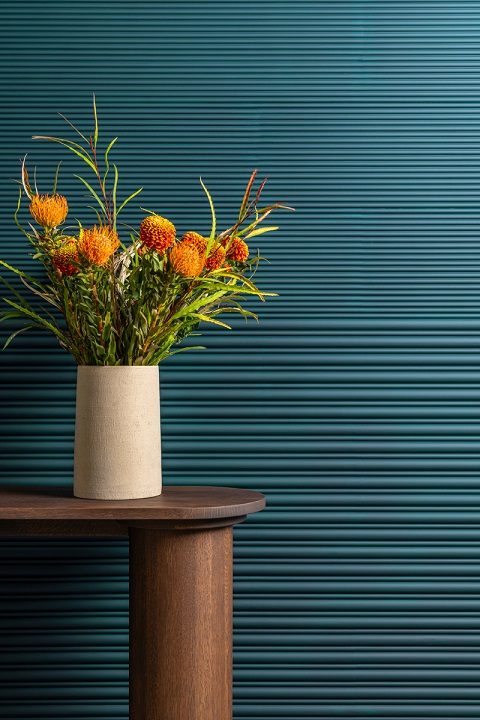
Belgian company Orac, a leading innovator in decorative interior design, has selected INEOS Styrolution’s sustainable bio-attributed materials for its new line of 3D Duropolymer wall panels, marking a significant step towards a more sustainable future. The new panels will be produced using Styrolution PS ECO 485N BC90, which contains 90% bio-attributed feedstock, and Styrolution PS ECO 158N BC100, made from 100% bio-attributed feedstock. Both polystyrene grades are made using renewable feedstock, based on a mass balance process certified under ISCC PLUS by a third party.

This collaboration highlights Orac’s commitment to sustainability with the 2024 launch of its 100% bio-circular Duropolymer panels. While Duropolymer has long been part of Orac’s product range, the company’s innovative approach now redefines its lifecycle. By combining bio-attributed feedstocks with recycled post- consumer and post-industrial waste, Orac achieves a fully bio-circular product. The ISCC PLUS certification for Orac’s bio-circular panels further underscores the integrity of its environmental efforts, setting a new benchmark for responsible decorative solutions.

“We are fully committed to leveraging our resources as a company to address climate change. Our goals of achieving carbon positivity by 2050 and bio-circularity by 2045 are both ambitious and essential. These targets demand large-scale innovation, and our partnership with INEOS Styrolution is a major step in driving us toward these objectives,” says Miguel Knockaert, R&D Director at Orac.

With INEOS Styrolution’s high-performance sustainable materials, Orac is able to meet the growing demand for eco-friendly products while maintaining the design flexibility and quality for which they are known. This collaboration not only emphasises the environmental benefits of mass-balanced, bio-attributed materials but also reflects both companies’ commitment to driving innovation in sustainable interior design.

“Orac’s selection of our sustainable bio-attributed materials for their 3D Duropolymer wall panels showcases our commitment to eco-friendly solutions. Made from renewable feedstocks and recycled materials, our ISCC– certified polystyrene grades support Orac’s sustainability goals. We look forward to further collaboration on additional sustainable options,” comments Ute Braunewell, Account Manager North & East Europe.

www.ineos-styrolution.com

#.ineos#modernplasticsindia #modernplasticsasia #modernplastics#plasticsnews#plasticsplanet #modernrecyclingindia#modernplasticsglobal#modernplasticsworld#plasticstalk#modernplasticsgermany#modernplasticsnetwork #plasticdevelopment
Kaptiva The Future of Injection Moulding Processing Machine – 100% Made in India

Kaptiva: The Future of Injection Moulding Processing Machine – 100% Made in India

Kaptiva is at the forefront of India’s injection moulding revolution, delivering machines that combine cutting-edge technology with affordability and reliability. With over 700 machines in the market and more than 500 satisfied clients, Kaptiva has cemented its position as a leader in the industry. Ranging from 80 tons to 1000 tons, each machine is designed to offer dependable, value-driven solutions, backed by 24/7 technical support and expert guidance. Kaptiva’s focus is to ensure maximum uptime, superior performance, and  seamless production across diverse industries.

One of Kaptiva’s standout features is its commitment to sustainability. In alignment with the Swachh Bharat Abhiyan, Kaptiva integrates up to 100% recycled materials into its machines, supporting India’s national mission for cleanliness and sustainability. This innovation not only contributes to a cleaner and greener manufacturing process but also enhances the industry’s commitment to environmental responsibility.

Each Kaptiva machine is packed with essential features that ensure precision, durability, and efficiency. From HEAVY-DUTY ‘T’ SLOTTED PLATENS for increased clamping precision to AUTOMATIC LUBRICATION that reduces wear and tear, these features are engineered to enhance productivity and reduce downtime. Additionally, HIGH TENSILE TIE RODS ensure long-lasting strength, and BIMETALLIC SCREW-BARRELS improve the longevity of critical components, enhancing overall machine reliability. These innovations are designed to handle the most demanding injection moulding applications, whether in automotive, electronics, consumer goods, or packaging industries.

Precision and Versatility for Multiple Industries

Kaptiva’s injection moulding machines are versatile and cater to a broad spectrum of industries. Whether you’re in automotive, electronics, consumer goods, or packaging, Kaptiva ensures precision and consistency in every application. The machines are equipped with advanced features that allow them to meet the high standards required across different sectors, making them a trusted solution for businesses seeking efficiency, reliability, and top-tier performance.

Advanced Control Systems

Kaptiva offers two robust control systems to suit various production needs:

  • Ser vo Hydraulic Control System: Providing energy efficiency and precise control, this system helps to lower energy consumption while maintaining high performance.
  • Conventional Hydraulics Control System: For those who prefer a more traditional approach, this system provides the power and dependability necessary for heavy-duty manufacturing tasks.In addition, the Smart Mold Controller allows for seamless mold management, improving cycle times and reducing operational complexity, which is vital for maintaining high efficiency in fast-paced production environments.

100% Made in India – Building a Stronger Manufacturing Ecosystem

Kaptiva takes pride in being 100% Made in India, contributing to the growth of the country’s manufacturing sector. By producing locally, Kaptiva ensures that its machines meet the specific needs of Indian manufacturers while also supporting the nation’s push toward self-reliance and industrial advancement.  Kaptiva’s commitment to excellence and innovation makes it the ideal partner for manufacturers looking to enhance their production capabilities with a cost-effective, high-performance injection moulding solution.

Industry Applications: Kaptiva Injection Moulding Machines

Kaptiva’s range of injection moulding machines, designed and manufactured 100% in India, delivers precise solutions to a wide variety of industries, including automotive, electronics, consumer goods, packaging, and more. Each machine is crafted to meet the unique demands of these industries with cutting-edge technology, durability, and exceptional performance. Below is a detailed breakdown of how Kaptiva machines serve various industries:

Automotive Industry

The automotive industry requires precision and durability to produce high-quality, complex plastic components. Kaptiva’s machines are the ideal solution for manufacturing automotive parts due to their robust screw design, capable of trouble-free processing of engineering and thermoplastic materials. The use of a barrier screw profile ensures better mixing and higher output when processing Olefins, a common material in automotive parts. Kaptiva machines tackle the challenges of versatile designs and high product quality standards with ease, making them a preferred choice for automotive manufacturers.

Electrical & Electronic Industry

Precision is key in producing electrical and electronic components, and Kaptiva delivers with its modular injection unit design. The machines are equipped with specialized screw profiles to efficiently process engineering materials such as PC, PMMA, Nylon, PBT, and POM, ensuring trouble-free molding of even the most complex components. Kaptiva machines are weight, offering the flexibility and accuracy required for producing automotive electrical parts and components for various electronic devices.

Consumer goods and packaging products

Consumer goods and packaging products demand machines that offer precision, speed, and efficiency to produce visually appealing and functional items. Kaptiva machines provide high precision with shorter dry cycles and guarantee low power consumption, making them perfect for large-scale production. The special barrier screw with an extra mixing zone ensures better color mixing and higher output, essential for manufacturing consumer goods. Whether producing simple daily-use items or elaborate packaging solutions, Kaptiva machines deliver top-notch performance with high output at minimal operational costs.

Household & Furniture Industry

Household and furniture items, though simple in design, require machines capable of high efficiency, low energy consumption, and fast cycle times. Kaptiva machines, equipped with two-barrel systems and barrier screws, are specifically designed to enhance output and ensure proper color mixing. The machines’ versatility makes them ideal for producing a wide range of household items and furniture, offering manufacturers a cost-effective solution without compromising quality.

PVC Segment

Kaptiva provides specialized machines for molding R-PVC, U-PVC, C-PVC, and Soft PVC items. The machines feature a specially designed screw with the optimal compression ratio and length-to-diameter (LD) ratio to mould rigid PVC materials without any quality issues.For soft PVC, Kaptiva offers a separate screw and barrel,ensuring the highest levels of precision and efficiency. To maintain consistent barrel temperatures, Kaptiva machines  come equipped with jacketed blowers, enhancing the control required for PVC molding.

Consumer Goods Industry

The manufacturing of plastic molded consumer goods requires fast production cycles, cost efficiency, and precision. Kaptiva’s servo system and electrical drives for screw rotation enable faster cycle times with significantly reduced operational costs, making the machines ideal for high-volume production. From attractive design to low-cost manufacturing, Kaptiva ensures that consumer goods production meets the demands of today’s competitive market while maintaining quality and reliability.

Kaptiva Machine Features Overview

Kaptiva machines are equipped with advanced features to ensure optimal performance and precision across multiple industries:

Clamp System

  • Heavy-Duty ‘T’ Slotted Platens for quick mould changes.
  • Automatic Mold Height Adjustment with Sun Gear for smooth operation.
  • Precise Double Mold Safety ensuring high levels of security during operations.
  • Finite Element Analysis (FEA) based Platen Design for enhanced durability.
  • High Tensile Strength, Chrome Plated Tie Rods for added reliability.

Core Pull

  • Two Core Pull Sets as a standard feature with customizable speed and pressure controls.
  • Specialized unscrewing core function for motorized gear rotation Molds, ensuring flexibility for complex mould designs.
  • Standardized PVC Customized Core Sequences for seamless operations in PVC segment production.

Ejector System

  • Adjustable speed and pressure settings through the screen for improved control.
  • Pulsating ejector strokes and two-stage forward profiles ensure precision in ejection processes.

Temperature Control

  • PID Temperature Controls across all zones.
  • Ceramic Heater Bands for energy-efficient heating, along with interruptive alarms for high/low temperature deviations.

 Injection System

  • Balanced Two Drive Injection Cylinders and multi-stage injection profiles for consistent and reliable operations.
  • Efficient Plasticizing with a four-stage radial piston hydro motor refilling system.
  • PID Barrel Temperature Controller for precise thermal management.

Hydraulics

  • Servo motor with gear pump for energy-efficient operation and fast response times.
  • Pressure sensing by pressure transducer and replaceable cartridge oil filtration for ease of maintenance.

Control System

  • TFT Color Display with large memory for storing up to 150 mold data sets.
  • Graphical Production Overview to monitor the complete production cycle visually.
  • Multilevel Password Protection for various operating levels, ensuring data security.

Manufacturing Excellence Kaptiva’s state-of-the-art manufacturing facility is located in Vatva, Ahmedabad, Gujarat, covering an area of 3,500 square meters. This fully computerized facility has a production capacity of 400 machines per year, ranging from 100 tons to 1000 tons,  ensuring the company’s commitment to quality and precision.

About Kapsun Resources Corporation

Kaptiva is a flagship brand of Kapsun Resources Corporation, a group of companies with six manufacturing facilities in India and one overseas. The corporation offers comprehensive solutions for the plastic industry, continuing to drive innovation and excellence in injection moulding technology.

www.kaptiva.in

#kaptiva#modernplasticsindia#modernplasticsasia #plasticsislife #plasticstalk #modernplastics#modernplasticsworld #pasticsnews #plasticsisgood #plasticsplanet#plasticsrecycling#plasticmagazine #plasticIndustry#modernplasticsmiddleeast#indianmagazine#innovations #modernplasticsamerica #modernplasticsbangladesh #modernplasticsasia #modernplasticsitaly

UNION PARTNERS WITH ENVALIOR TO DELIVER SUSTAINABLE SNOWBOARD BINDING MADE OF DURETHAN BLUE

UNION PARTNERS WITH ENVALIOR TO DELIVER SUSTAINABLE SNOWBOARD BINDING MADE OF DURETHAN  BLUE

  • The asymmetric snowboard binding features Envalior’s Durethan Blue, an eco-friendly nylon, allowing Union Binding Company to create its most sustainable snowboard binding yet.
  • Durethan Blue, made from 90% sustainable raw materials using a mass balance approach, includes bio-based, recycled content and provides high flow and heat stabilization.
  • Durethan Blue has met all of Union Binding Company’s internal quality control standards for strength, cold temperature durability, and overall product lifecycle.

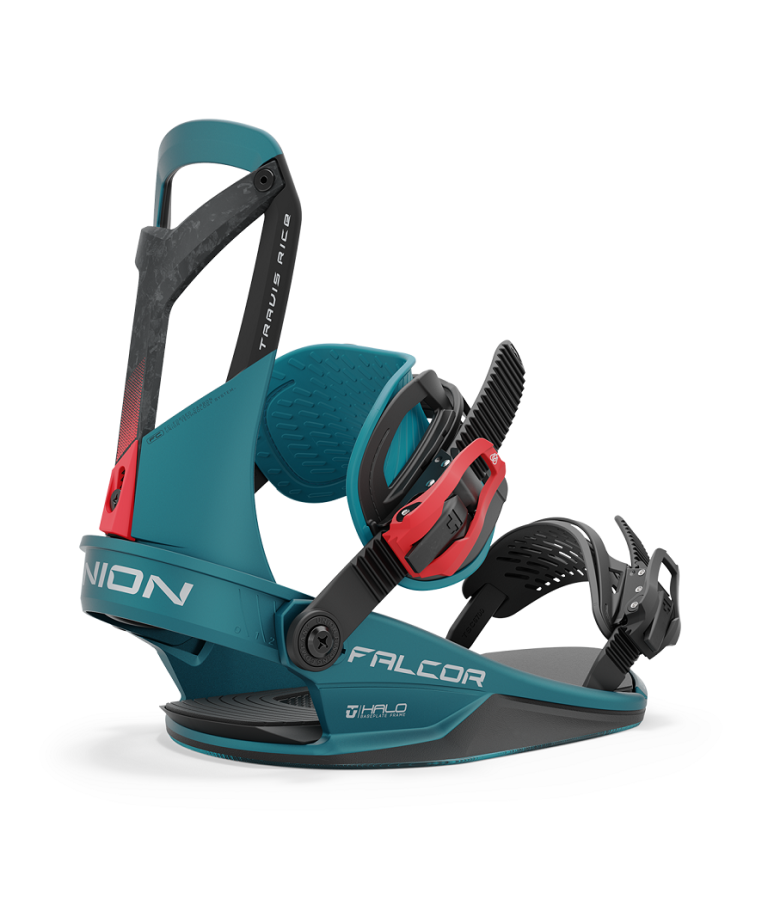
Envalior today announces it has partnered with Union Binding Company, a snowboard binding manufacturer based in Italy, to deliver redesigned Travis Rice Falcor Signature Snowboard Bindings. The asymmetric binding utilizes Envalior’s Durethan Blue, a nylon, which enables Union to make its most sustainable snowboard binding to date. The new material is a member of Envalior’s sustainable product family, attributed with 90% of sustainable raw materials, based on a mass balance approach via the International Sustainability and Carbon Certification (ISCC) PLUS certification program that ensures sustainability and traceability throughout the supply chain.

What makes the redesigned snowboard bindings unique is the all-new 2 Layer baseplate construction, which allows for two individual layers: the core and the frame. The two layers enable the use of unique engineering materials to achieve the desired ride and feel of the binding. Durethan BLUEBKV315ZH2.0 allows the core of the binding to be stiff and responsive, while the frame is softer and more flexible than traditional snowboard baseplates, allowing for a unique ride feel and increased side to side freestyle flex.

Performance meets sustainability

Union selected Durethan  Blue for its redesigned snowboard binding because the material is partially crystalline thermoplastics, offering high mechanical strength and stiffness, good dielectric properties, and good friction and wear properties. It serves as the ideal drop-in replacement for fossil-based products. Durethan is offered as bio-based, mass balanced, and recycled-based and leads to a product carbon footprint reduction of more than 60% CO2-eq in comparison to conventional, fossil based material.

Ninety percent of Durethan Blue’s raw materials are sustainable, based on a mass balance approach, which allows companies to track the flow of sustainable and non-sustainable materials within their supply chains.The ISCC PLUS certifications assure that the amount of bio-based or recycled material corresponds to the amount used in production processes. Manufacturers can gradually transition away from fossil resources to renewable alternatives while maintaining product quality and performance.

Durethan  Blue has passed all of Union’s in-house quality control tests for strength, durability in cold temperatures and product lifecycle. Every pair of Union bindings goes through rigorous testing during the R&D and design phase, initial production and the main production cycle.

”At Envalior, we are committed to sustainability, and this innovative solution demonstrates that sustainability and high performance can coexist, thanks to our ISCC-certified material and mass balance concept,” said Günter Margraf, Director of Sustainability for Envalior. “Our material meets the demands of winter sports without compromising performance, and we’ve integrated this solution into our existing production processes, making the shift to sustainable options easier. Sustainability isn’t just a goal—it’s the path forward.”

“Union is committed to increasing the use of more environmentally friendly materials because it’s crucial to show that we can continue to use plastics in our lives—as long as we find sustainable options and use them responsibly. This approach ensures we’re not compromising the future of our planet,” said Pier Patriarca, Lead Product Engineer at Union Binding Company.

www.envalior.com

#envalior#modernplasticsindia  #modernplasticsasia #plasticsislife  #plasticstalk#modernplastics #modernplasticsworld #pasticsnews #plasticsisgood #plasticsplanet#plasticsrecycling#plasticmagazine #PlasticIndustry#modernplasticsmiddleeast #indianmagazine #innovations #modernplasticsamerica #modernplasticsbangladesh #modernplasticsasia #modernplasticsitaly


Kaptiva Delivering Excellence Across Industries

Kaptiva: Delivering Excellence Across Industries

By Vishal Tripathi, Head of Product Development at Kapsun Resources Corporation (Kaptiva)

At Kapsun Resources Corporation, innovation and customer-centricity drive our product development initiatives. Our injection moulding machines are a testament to our commitment to excellence, offering precision and efficiency across diverse industrial applications.

Each Kaptiva machine is built to provide unparalleled performance in various fields, including electronics, medical, automotive, and packaging industries. For instance, our servo-controlled models ensure reduced cycle times, w h i l e m a i n t a i n i n g exceptional repeatability, enabling manufacturers to meet stringent production deadlines without compromising quality.

A major highlight of our machines is their adaptability. From PET preforms to PVC fittings and consumer goods, Kaptiva machines cater to a vast array of applications. The customizable features of our machines, such as multi-barrel configurations and vertical-horizontal combinations, are designed to meet specific customer needs. This ensures optimal productivity, whether you are processing specialty polymers or traditional resins.

Furthermore, our machines are designed to address today’s challenges of rising operational costs. The energy-saving mechanisms, including hybrid technologies and precision dosing systems, significantly reduce electricity consumption and material wastage. These advancements not only minimize environmental impact but also enhance cost efficiency for manufacturers.

At Kaptiva, we recognize the importance of after-sales service and technical support in ensuring uninterrupted operations for our clients. Our team of experts is always on hand to provide guidance, ensuring our customers get the best out of their investment. Our journey at Kaptiva has always been about pushing boundaries and redefining possibilities. We remain steadfast in our mission to deliver machines that elevate our clients’ capabilities, making us a trusted name in injection moulding solutions worldwide.

Kaptiva Hybrid Injection Moulding Machines

Kaptiva’s hybrid injection moulding machines combine the best of hydraulic and electric technologies, delivering unmatched performance for high-speed, high-precision applications.

Why Choose Hybrid Machines?

Optimal Efficiency: Electric screw drives reduce cycle times while hydraulic systems provide robust clamping force.

Energy Savings: A smart combination of electric and hydraulic power reduces energy consumption significantly.

Precision Engineering: These machines are ideal for manufacturing intricate components with tight tolerances.

Applications: Industries such as medical devices, consumer electronics, and automotive benefit greatly from the speed, precision, and reliability of Kaptiva’s hybrid machines. With their focus on efficiency, innovation, and sustainability, Kaptiva’s hybrid machines set a new benchmark in the injection moulding industry.

www.kaptiva.in

#kaptiva#modernplasticsindia#modernplasticsasia #plasticsislife #plasticstalk #modernplastics#modernplasticsworld #pasticsnews #plasticsisgood #plasticsplanet#plasticsrecycling#plasticmagazine #plasticIndustry#modernplasticsmiddleeast#indianmagazine#innovations #modernplasticsamerica #modernplasticsbangladesh #modernplasticsasia #modernplasticsitaly

HORIZON MICROTECHNOLOGIES RECEIVES ESA SPARK FUNDING TO ADVANCE 3D PRINTING AND METALLISATION TECHNOLOGY FOR SPACE APPLICATIONS

HORIZON MICROTECHNOLOGIES RECEIVES ESA SPARK FUNDING TO ADVANCE 3D PRINTING AND METALLISATION TECHNOLOGY FOR SPACE APPLICATIONS

Horizon Microtechnologies can today announce that it has secured funding in the framework of the European Space Agency’s (ESA) SPARK programme administered by the Center for Satellite Navigation Hesse GmbH, CESAH. This funding marks a significant milestone in Horizon’s journey, fuelling the development of its advanced 3D printing and metallisation technology to meet the rigorous demands of space applications.

The Spark funding will enable Horizon to refine its technology and demonstrate that its 3D- printed, metallised components are capable of meeting the extreme requirements of the space environment. By developing components that can withstand the harsh, unserviceable conditions of space, Horizon is proving that its technology is not only innovative but mature enough to address the ultimate engineering challenge.

“Receiving ESA Spark funding is a powerful step forward for Horizon,” says Andreas Frölich, Horizon’s CEO. “Space applications demand the highest standards of performance, longevity and reliability, and this support from ESA through CESAH is a testament to the potential we have to drive innovation in space technology.”

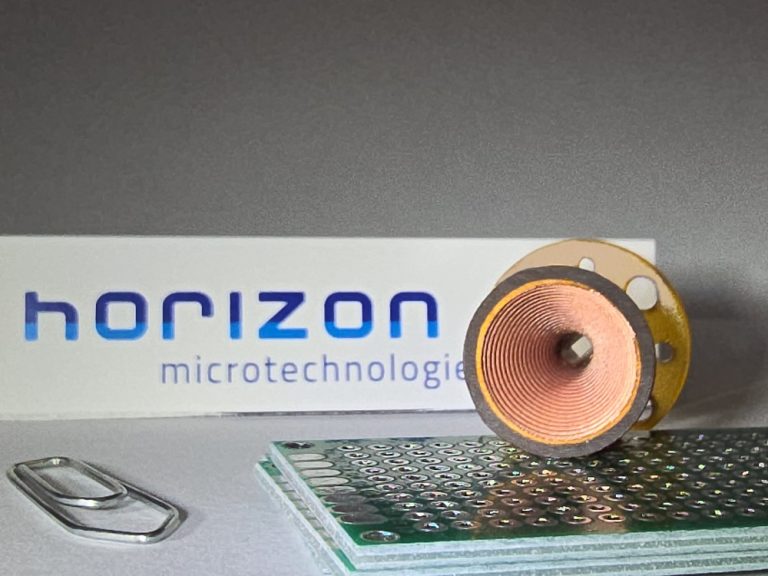
Horizon’s unique approach integrates the precision and design flexibility of 3D printing with advanced metallisation processes. For space applications, this means lighter, more compact components that maintain structural integrity and functionality, even in extreme conditions.

Weight reduction, or SWaP (Size, Weight, and Power), is a crucial factor in space missions, as every gram counts toward efficiency. With Horizon’s technology, components can be made lighter without sacrificing durability — a game-changer for space design and mission success.

Additionally, Horizon’s technology supports the creation of monolithic components with complex geometries that would be challenging to achieve with traditional manufacturing techniques. This opens the door to novel design options, enabling engineers to build components that are both functionally robust and optimised for space constraints.

Frölich continues, “This project does more than just position Horizon’s technology within the space sector, it also paves the way for broader industry adoption. Success in space — the most demanding of environments — provides a compelling proof-of-concept for sectors such as telecommunications, aerospace, and defence, where reliability and endurance are paramount. If Horizon’s components can thrive in space, they can certainly meet the high standards of terrestrial applications.”

Looking ahead, the ESA-supported project represents a vital step in Horizon’s mission to advance 3D printing and metallisation technology for high-performance applications. By participating in the ESA Spark program, Horizon is building a foundation of credibility and performance that will drive the company toward even greater achievements.

Frölich concludes, “Horizon Microtechnologies is thrilled to embark on this next phase of growth, backed by ESA Spark funding and inspired by the possibilities of space innovation.

As the company continues to push the boundaries of what is possible with 3D-printed, metallised components, we invite our partners, customers, and the wider technology community to join us on this exciting journey.”

www.3dmicrofabrication.com

#3dmicrofabrication#modernplasticsindia #modernplasticsasia #plasticsislife

#plasticstalk #modernplastics #modernplasticsworld #plasticsnews

#plasticsisgood #plasticsplanet #plasticsrecycling